Gut Health and Regeneration: How the Digestive System Repairs Itself
Gut health conversations usually focus on food, digestion and beneficial bacteria. Yet another compelling story lies within the digestive tract: its lining is continually protected and renewed. Understanding this natural repair process opens a fascinating area of research into how the body maintains its own tissues.
My interest in wellness led me to intestinal stem cells, regenerative medicine and the work of Chinese researcher Professor Rongxiang Xu. Could understanding the body’s repair processes inspire new approaches to digestive wellness? This article follows that scientific journey and explains why Norland GI Vital attracted my interest as a distributor.
Commercial disclosure: I am an independent Norland distributor and may benefit financially from related product enquiries or purchases. I am not a healthcare professional. My aim is to keep established scientific findings, preliminary research and commercial claims clearly distinct.
Five Key Takeaways
- The gut renews itself naturally. Specialised stem cells continually replace the cells lining the intestines.
- The gut has built-in renewal mechanisms. Scientists have identified stem cells and other processes that maintain and repair gastrointestinal tissues.
- Regenerative research is advancing. Laboratory discoveries involving stem cells, cell plasticity and organoids are opening possibilities for future treatments.
- Professor Xu contributed a distinctive research programme. His experimental studies and granted US patent provide a documented history of work on tissue restoration.
- GI Vital offers a relevant product to explore. Its digestive-wellness positioning and historical research connections make its formulation and product information worth examining.
Gut Health: A Digestive System Designed to Protect and Renew Itself
1. What Gut Health Means Beyond the Microbiome
The gastrointestinal system does considerably more than process food. It digests, absorbs nutrients, removes waste and interacts with the immune and nervous systems. The gut microbiome contributes to these functions, but gut health is not determined by microbes alone.
In February 2026, an international expert panel convened by the International Scientific Association for Probiotics and Prebiotics published a consensus definition of gut health. The researchers emphasised normal gastrointestinal function, the absence of active disease and the importance of symptoms that affect quality of life.
This broader understanding of gut health draws attention to an extraordinary feature of the digestive tract: its protective lining is not static. It is continually maintained and renewed.
For practical guidance on nutrition, fibre and everyday habits, see our guide to improving gut health.
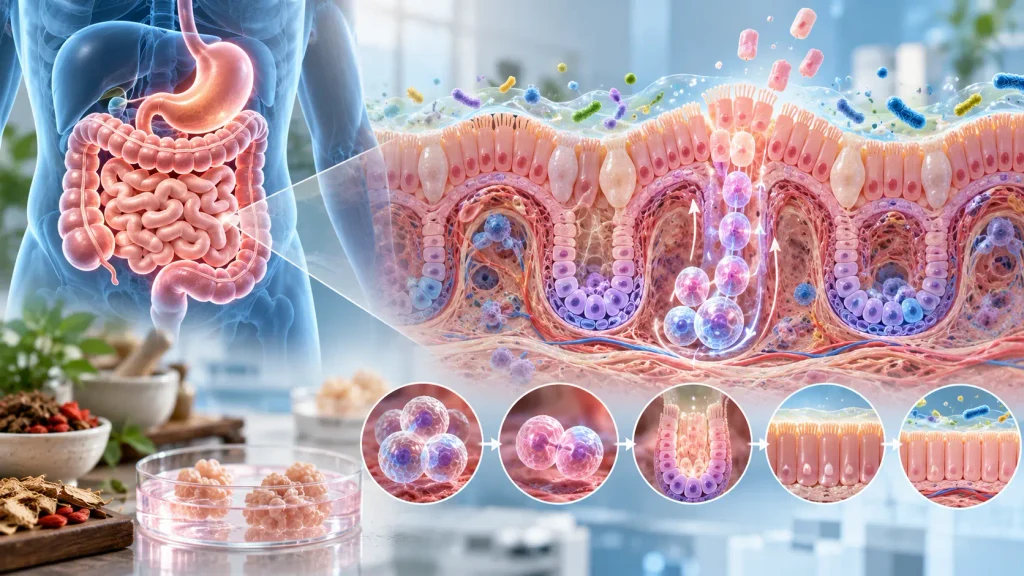
2. How the Gut Lining Protects and Renews Itself
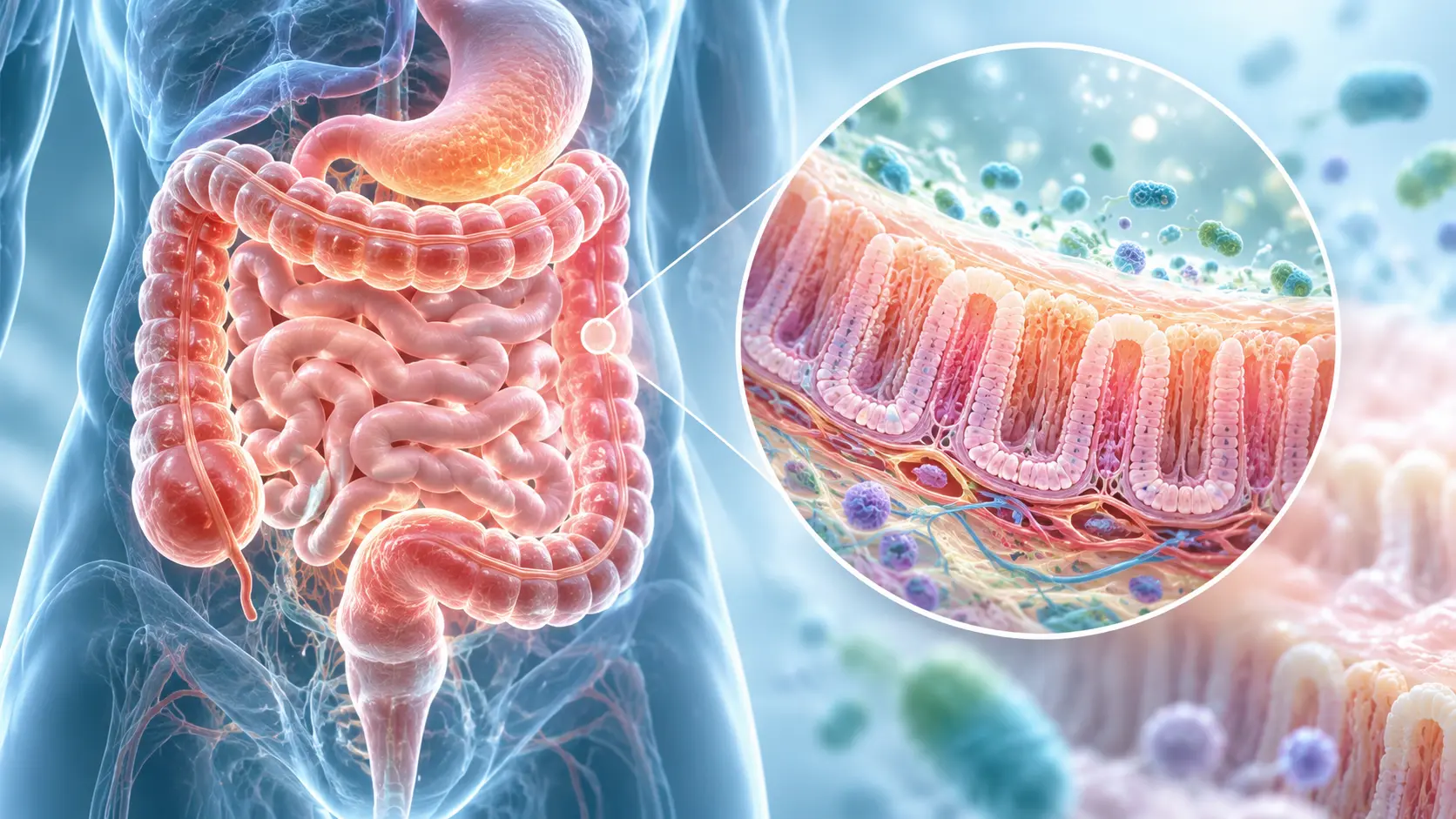
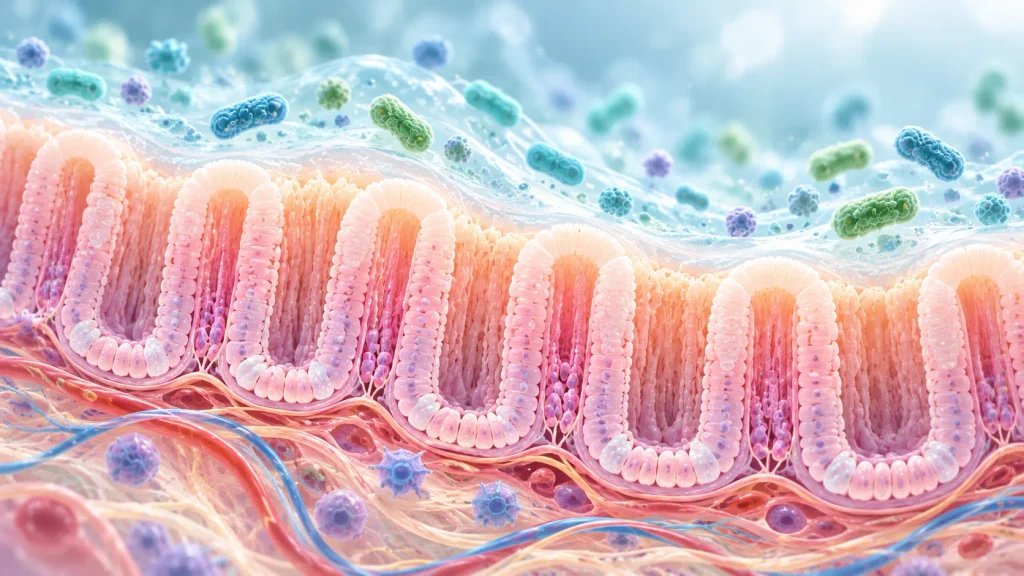
The digestive tract must absorb nutrients while limiting the entry of harmful substances. Its protections include mucus, epithelial cells, regulated cell junctions, antimicrobial substances and immune responses.
In the stomach, protective mucus and bicarbonate help shield tissues from digestive acid. In the intestines, epithelial cells form a selective barrier between the contents of the gut and the body’s internal environment.
Because the lining is exposed continually to digestive chemicals and microbes, much of it replaces its cells within days. Other repair processes respond to injury.
This continuous renewal is one of the most striking features of gastrointestinal biology, and it is the starting point for understanding why researchers are interested in intestinal stem cells and regenerative medicine.
The Science of Gastrointestinal Tissue Repair and Regeneration
1. Intestinal Stem Cells and the Renewal of Gut Tissues
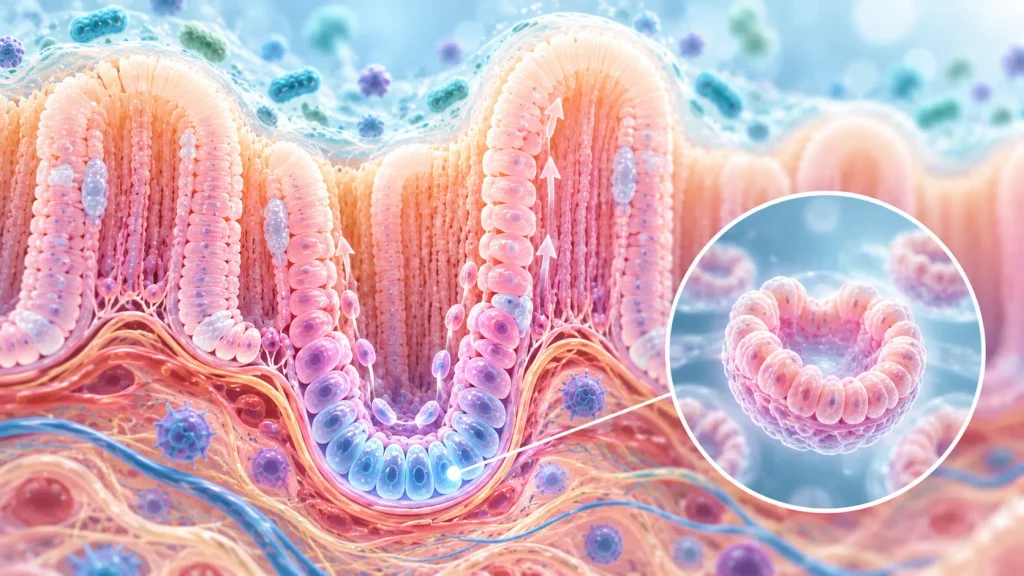
Stem cells can produce new cells while maintaining the populations needed for tissue renewal. In the small intestine, important stem-cell populations sit within structures called crypts, between the projections that absorb nutrients.
A major advance came in 2007, when researchers led by Nick Barker identified intestinal stem cells associated with a marker called Lgr5. Their study, published in Nature, showed through experiments in mice that these cells could generate the different epithelial cell types needed to maintain the intestinal lining.
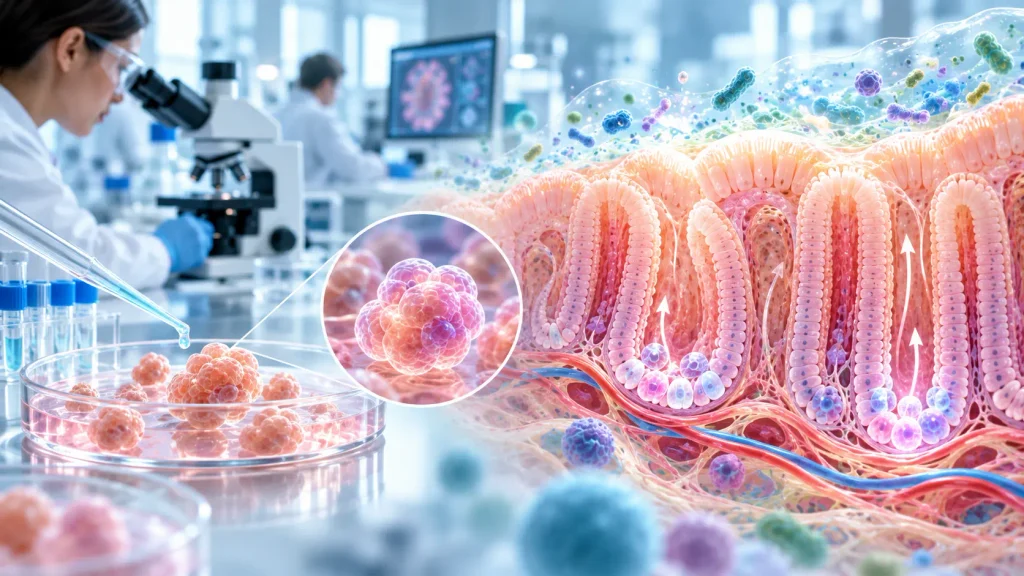
In 2009, Toshiro Sato and colleagues showed that individual Lgr5-positive stem cells could produce organised intestinal structures in laboratory culture. These miniature tissue structures, known as organoids, reproduce important features of intestinal tissue. The 2009 Nature study gave researchers a powerful way to investigate intestinal development, disease and potential regenerative treatments.
Organoids give researchers a window into how intestinal cells organise themselves. They also help scientists explore the conditions that make healthy tissue growth and repair possible.
2. How Tissue Repair Differs From Regeneration
Renewal, repair and regeneration are often used interchangeably, but they describe related, different processes.
Renewal is the normal replacement of ageing or worn-out cells. Repair occurs when damaged tissue responds to injury. In the gastrointestinal tract, neighbouring epithelial cells can move across an injured surface and help reseal the protective barrier, a process known as epithelial restitution. Cell proliferation and differentiation then help replace missing cells and restore tissue structure. Regeneration describes the restoration of lost or damaged tissue, sometimes approaching its original organisation and function.
These processes overlap, and their effectiveness depends on the extent of injury, inflammation, available stem cells and the surrounding biological conditions.
Scientists have also found that certain specialised intestinal cells can regain stem-cell-like functions after injury. This phenomenon, called cellular plasticity, challenges the idea that cellular differentiation is always an irreversible endpoint. A 2020 scientific review of intestinal regeneration explains how the stem-cell environment, immune signals and cellular plasticity contribute to tissue restoration.
These discoveries offer a valuable starting point for regenerative science: the digestive tract already has sophisticated repair machinery, and researchers are learning more about how that machinery responds to damage.
The Development of Regenerative Restoration Research
1. Professor Rongxiang Xu and the Origins of Regenerative Restoration
Among those pursuing these questions was Professor Rongxiang Xu, a Chinese physician and inventor whose regenerative-restoration research extended from skin to gastrointestinal tissues. His work forms part of a documented history of investigation.
Xu’s early investigations focused on burns and damaged skin, drawing on formulations and ideas associated with traditional Chinese medicine. He developed Moist Exposed Burn Therapy and the preparation known as Moist Exposed Burn Ointment (MEBO). The programme subsequently expanded into investigations of tissue restoration beyond skin injury.
Xu and colleagues asked whether conditions surrounding damaged tissue could encourage its cells to participate in repair. They explored this through experiments on skin and gastrointestinal tissues and through patent filings describing their technical approaches.
Xu’s work brought traditional Chinese medicinal materials into conversation with modern cell biology. Its experimental findings deserve assessment on their merits, regardless of where the research originated.
2. Potential Regenerative Cells and the Significance of Keratin 19
Xu proposed that some differentiated cells retain a capacity to regain regenerative functions under suitable conditions. He called these Potential Regenerative Cells (PRCs). His theory suggested that cells already performing specialised functions might hold regenerative potential that could be activated when tissues need repair.
Modern cell biology has established forms of reprogramming and plasticity, including specialised cells contributing to tissue repair. These findings make Xu’s questions interesting; the exact mechanisms in his PRC framework remain open to investigation.
One relevant biological marker is Keratin 19 (K19), a structural protein found in particular epithelial cell populations. In 2015, Samuel Asfaha and colleagues published research in Cell Stem Cell showing that Krt19-positive cells in mouse intestinal and colonic tissues could contribute to regenerating certain stem-cell populations after injury.
The K19 findings connect this research history with established studies of regenerative epithelial populations. K19 helps scientists identify certain cells but does not itself predict the outcome of a treatment.
3. Chinese Experimental Studies and the 2024 Scientific Reassessment
Xu’s research programme also investigated gastrointestinal tissue. Two reports published through the MEBO organisation in 2001 describe experiments on embryonic mouse stomach and intestinal tissues grown in laboratory culture.
In the stomach-tissue investigation, researchers reported that explants exposed to MEBO gastrointestinal capsule material survived longer and supported greater cellular growth than untreated controls. A related intestinal-tissue experiment reported cell growth and the development of tissue structures resembling intestinal mucosa.
The 2001 reports in MEBO’s research archive record methods and observations involving embryonic mouse gastrointestinal tissue. They provide original experimental leads for further evaluation and independent replication.
Interest in Xu’s ideas did not end with those early experiments. In April 2024, UCLA-affiliated researcher Bruno Péault revisited them in the Frontiers in Bioengineering and Biotechnology article “New from old: recycling differentiated cells into regenerative cells using traditional Chinese medicine?” The journal published it as an Opinion article, placing Xu’s ideas in conversation with later developments in cell reprogramming and regenerative biology.
Together, these sources document a sustained programme linking traditional Chinese formulations with experimental tissue research and questions that continue to interest regenerative scientists.
Ageing, Gastrointestinal Damage and the Limits of Natural Repair
1. How Ageing Changes the Gut’s Repair Capacity
The digestive system retains strong regenerative abilities throughout life, but these processes do not operate identically at every age. Research indicates that ageing can affect intestinal stem-cell function, the signals governing cell renewal and the environment surrounding stem cells.
One important investigation, published in Cell Reports in 2017, examined the Wnt signalling pathway, a cellular communication system. Nalapareddy and colleagues found that reduced Wnt signalling contributed to age-associated impairment of intestinal stem-cell function, and that experimentally manipulating the pathway improved aspects of stem-cell performance in laboratory models.
The findings help explain why maintaining the gut’s ability to renew its lining becomes a particularly interesting question as we age. Nutrition, illness, medications and other aspects of health also influence how well the digestive system functions over time.
2. Inflammation, Infection and Disrupted Tissue Repair
Natural repair can become less effective when damage is persistent or extensive. Chronic inflammation, infections, certain medications and gastrointestinal diseases can all disrupt the protective mucosal barrier.
Helicobacter pylori, for example, can colonise the stomach and cause chronic inflammation. In some individuals it contributes to peptic ulcers and increases the risk of gastric cancer. Inflammatory bowel diseases can also cause repeated injury to intestinal tissues.
Understanding both the causes of tissue injury and the body’s response to that injury creates opportunities for more effective care. Appropriate treatment of underlying conditions remains important, while regenerative research explores additional ways to support tissue restoration.
What Regenerative Research Means for Digestive Health
1. From Laboratory Discoveries to Regenerative Treatments
Regenerative medicine investigates ways to restore damaged tissues using cells, biological signals, engineered structures and other interventions. For gastrointestinal diseases, researchers are exploring intestinal stem cells, organoids and methods of improving mucosal repair. Approaches range from growing intestinal tissue outside the body to altering regenerative signals within it.
A major scientific roadmap published in September 2026 reviewed advances in intestinal stem-cell biology and routes towards clinical application. It highlights how far researchers have come in understanding intestinal renewal and the opportunities now emerging from organoids, cellular signalling and tissue-repair research. The next challenge is translating promising findings into dependable patient benefits.
The promise of this field has attracted attention beyond laboratories. In his 2013 State of the Union address, President Barack Obama referred to research on drugs intended to regenerate damaged organs—a sign of the growing international interest in regenerative medicine at the time.
2. What Regeneration Patents and Clinical Studies Actually Establish
One way to trace the development of regenerative-restoration ideas is through the patents that formally describe their inventions. A granted patent is a meaningful technological milestone: it records a claimed invention, its technical approach and material disclosed to the public.
A notable example is US Patent 6,685,971 B2, granted to Rongxiang Xu in February 2004. It concerns compositions and methods intended to promote repair and regeneration of gastrointestinal mucosal tissue. The published patent includes formulation examples and laboratory and animal investigations, making it a substantial primary document in the history of Xu’s gastrointestinal research.
The research continued through a later US patent application, published in 2021 and associated with the Beijing Rongxiang Institute of Regenerative Medicine, addressing a preparation investigated for effects on H. pylori. Its disclosure reports laboratory work and observations involving 22 patients. The small, non-randomised human report is useful as an early research lead and helps explain why more rigorous clinical follow-up would be valuable.
Together, these patent records provide a traceable progression from early gastrointestinal repair formulations to further investigation of mucosal health. They are an important reason to take the underlying research history seriously, while any present-day product is best assessed using information about its own formulation and use.
Norland, Vital (US) Life Regeneration and GI Vital
1. The Documented Development and International Introduction of GI Vital
For someone exploring digestive-wellness products, Norland GI Vital Softgel Capsules present an interesting connection to this wider story. GI Vital is marketed for digestive wellbeing, and its international history includes involvement by Vital (US) Life Regeneration. The product invites a practical question: what does this research heritage mean for someone considering GI Vital today?
An important moment came in November 2018, when Vital (US) Life Regeneration presented GI Vital at a traditional Chinese medicine symposium held at United Nations Headquarters in New York, according to a contemporaneous PR Newswire announcement. The event illustrates the effort to introduce Chinese regenerative-restoration ideas and related products to an international audience.
That international presentation is part of GI Vital’s documented commercial development. For prospective customers, the next useful step is to consider the formulation and product information available in their own market, alongside the historical research that stimulated interest in the field.
2. GI Vital Ingredients, Formulations and Their Research Background
For customers, ingredients are a useful starting point. GI Vital is a softgel supplement marketed for digestive wellness, with plant-derived ingredients identified in published descriptions.
The earlier 2004 patent describes edible oils, waxes and botanicals, including sesame oil, beeswax and Scutellaria root. Some South African GI Vital distributor descriptions list similar ingredients, reflecting that formulation tradition.
Product descriptions can vary across markets. For example, a GI Vital retailer listing gives a different ingredient combination from a purported label, including sesame oil, phospholipids, bee propolis, lion’s mane mushroom and astragalus extracts. The most useful reference for a South African customer is the ingredient list on the particular product being offered.
I can help readers review the current South African label, recommended use and available documentation rather than rely on descriptions intended for another market.
3. Clinical Evidence, Certifications and Safety Considerations
GI Vital has attracted attention partly because of the wider regenerative-restoration research discussed in this article. That history includes experimental publications and patents, giving interested readers material they can explore beyond a promotional description. The available publicly accessible evidence has not established controlled human clinical outcomes for the exact GI Vital formulation currently marketed in South Africa, so its role is best described as a digestive-wellness supplement rather than a treatment for a particular disease.
GI Vital has been promoted with references to laboratory reports, patents and a Certificate of Free Sale. Each record answers a different question about testing, invention or trade. The FDA’s export-certificate guidance and supplement guidance explain these distinctions. Interested readers can ask which reports are available for the product offered in South Africa.
For South African buyers, product information and promotional descriptions should also align with applicable requirements overseen by the South African Health Products Regulatory Authority (SAHPRA). Clear information about what a supplement is intended for helps customers make informed choices.
As with other botanical supplements, checking the actual label is sensible, particularly for people with sesame or bee-product allergies or those taking medication. Customers can raise individual suitability questions with a qualified healthcare professional.
4. Considering GI Vital: Information and Customer Enquiries
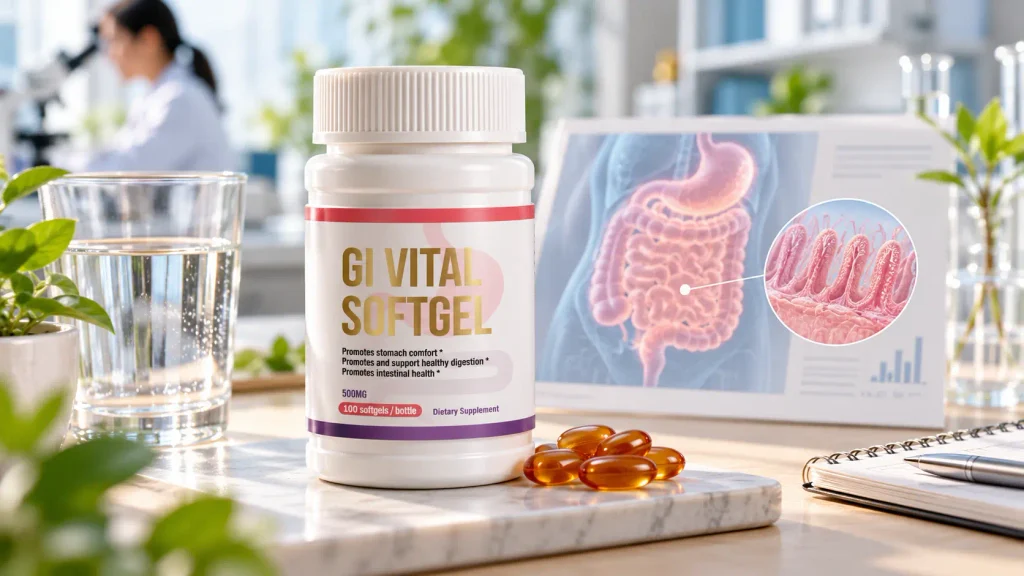
GI Vital interests me because it connects a history of regenerative-restoration research with a product customers can explore today. Xu’s research, patent records and the product’s international introduction give it a distinctive story. I want prospective customers to understand the product and decide whether it suits their wellness interests.
Claimed Benefits of Norland GI Vital Softgels
According to Norland product descriptions, GI Vital Softgels are promoted for the following benefits:
- Supports healthy digestion – Helps promote normal digestive function and gastrointestinal wellbeing.
- Promotes stomach comfort – Supports digestive comfort and helps soothe occasional stomach irritation.
- Supports the gastrointestinal lining – Claimed to help protect and maintain the stomach and intestinal mucosal lining.
- Promotes natural tissue renewal – Marketed as supporting the body’s normal cellular repair and regeneration processes.
- Enhances nutrient absorption – Claimed to support the absorption of nutrients from food.
- Supports intestinal health – Promotes the general health and proper functioning of the digestive tract.
- Helps relieve digestive discomfort – Marketed for occasional constipation and irritation associated with certain foods.
- Supports cellular health – Contains plant-derived ingredients associated with general cellular wellbeing.
- Promotes internal balance – Claimed to help maintain the body’s natural physiological balance (homeostasis).
Interested in learning more about GI Vital?
You are welcome to contact me through the Hurlth enquiry page to request information about the current product, its ingredients, availability and supporting documentation.
GI Vital must not replace prescribed treatment or delay assessment of persistent symptoms.
Conclusion
The digestive system is equipped with a sophisticated capacity for self-maintenance. Research into intestinal stem cells, epithelial renewal and cellular plasticity has revealed how much the gut does every day to protect and restore its tissues. Modern regenerative medicine is building on that knowledge and opening promising avenues for investigation.
Professor Xu’s experiments, regenerative-restoration ideas and US patent on gastrointestinal mucosal repair form an important research history. GI Vital’s international development brings that story into the digestive-wellness marketplace.
For me, exploring gut health means combining curiosity about these scientific developments with practical decisions about everyday wellness. If GI Vital has caught your attention, I welcome the opportunity to help you learn about the current product, review its information and find out how to obtain it. You can use the enquiry button above to begin that conversation.
Frequently Asked Questions
1. What Does Gut Health Actually Mean?
Gut health refers to the normal functioning of the gastrointestinal system, including digestion, nutrient absorption, barrier protection and interactions with microorganisms and the immune system.
It is broader than the composition of the gut microbiome. Good gut health also involves the absence of active gastrointestinal disease and of troublesome symptoms that affect quality of life.
2. Can the Intestinal Lining Repair Itself Naturally?
Yes. The intestinal lining continually renews itself and has mechanisms for responding to injury. Specialised epithelial cells can move across damaged surfaces, while intestinal stem cells help replace cells and restore tissue structure.
The body’s repair processes are impressive, and their study is helping researchers develop new approaches to gastrointestinal health. Persistent symptoms still deserve appropriate medical assessment.
3. How Quickly Does the Intestinal Lining Renew Itself?
Much of the intestinal surface epithelium renews within approximately three to five days, although timing differs among cell types and regions of the digestive tract. This rapid turnover reflects the intestine’s continuous exposure to digestive substances and microorganisms.
This rapid turnover is one reason researchers are so interested in the intestine as a model for understanding tissue maintenance and recovery.
4. What Role Do Intestinal Stem Cells Play in Gut Regeneration?
Intestinal stem cells generate the specialised epithelial cells needed to maintain the intestinal lining, and they also contribute to tissue repair after injury.
Research on Lgr5-positive cells and other regenerative cell populations has significantly advanced our understanding of these processes. Scientists are now investigating whether this knowledge can support future regenerative treatments.
5. Does Ageing Affect the Gut’s Ability to Repair Itself?
Ageing can influence intestinal stem-cell function, regenerative signalling and the surrounding tissue environment, and laboratory research has identified pathways associated with these changes. Ageing does not, however, mean that gastrointestinal repair stops.
Research on ageing and intestinal repair is expanding our understanding of the signals and conditions that help the digestive lining function well throughout life.
6. What Are Potential Regenerative Cells (PRCs)?
Potential Regenerative Cells are part of a theory proposed by Professor Rongxiang Xu. The concept suggests that certain differentiated cells may retain regenerative capabilities that could become active under suitable conditions.
Modern research has independently demonstrated several forms of cellular plasticity. Xu’s PRC framework remains an interesting part of the history of how scientists have thought about activating the body’s own repair potential.
7. What are the benefits of adding Norland GI Vital Softgels to my daily wellness routine?
Norland positions GI Vital Softgels as a product for everyday digestive wellness, including digestive comfort, normal gastrointestinal function and interest in supporting the gut lining. Its distinctive appeal also lies in the history of regenerative-restoration research and product development explored in this article.
If you would like to explore GI Vital, contact me for details of the product available in South Africa, its current label, recommended use, availability and purchasing options. I would be pleased to help you make an informed decision.